Titel und Fotos, ohne die Geschichten: die schaltest du frei. Nichts davon ist ein Spoiler.
4
Wat Phra Singh
King Phayu founded this temple in the fourteenth century to enshrine the ashes of his father, King Kham Fu. After warfare and abandonment damaged Chiang Mai’s religious institutions, Kawila restored the monastery as part of his deliberate revival of the old Mangrai capital.
5
Wat Lok Moli
A historic Buddhist temple with unique north-south orientation and bare brick chedi.
6
Chang Phueak Gate
The white-elephant legend begins at Chiang Mai’s northern city gate: King Kue Na is said to have released the relic-bearing elephant here and followed it toward Doi Suthep. The gate was then called Hua Wiang; its later name means “White Elephant Gate,” although that name probably derives from a separate monument to two royal retainers rather than the relic-carrying animal.
7
Wat Chiang Man
Wat Chiang Man is known for being the oldest temple in Chiang Mai, Thailand.
8
Three Kings Monument, Chiang Mai
A monument dedicated to the founding fathers of the Lanna Kingdom.
9
Wat Inthakhin Sadue Mueang
This small temple marks Chiang Mai’s symbolic “navel,” where the city pillar originally stood after Mangrai founded the capital in 1296. Local tradition also identifies the vicinity as the place where Mangrai was killed by lightning; during Kawila’s restoration, the pillar was transferred elsewhere, leaving the old spiritual center behind.
10
Wat Phan Tao
Wat Phan Tao is best known for its teak wood viharn and historical significance.
11
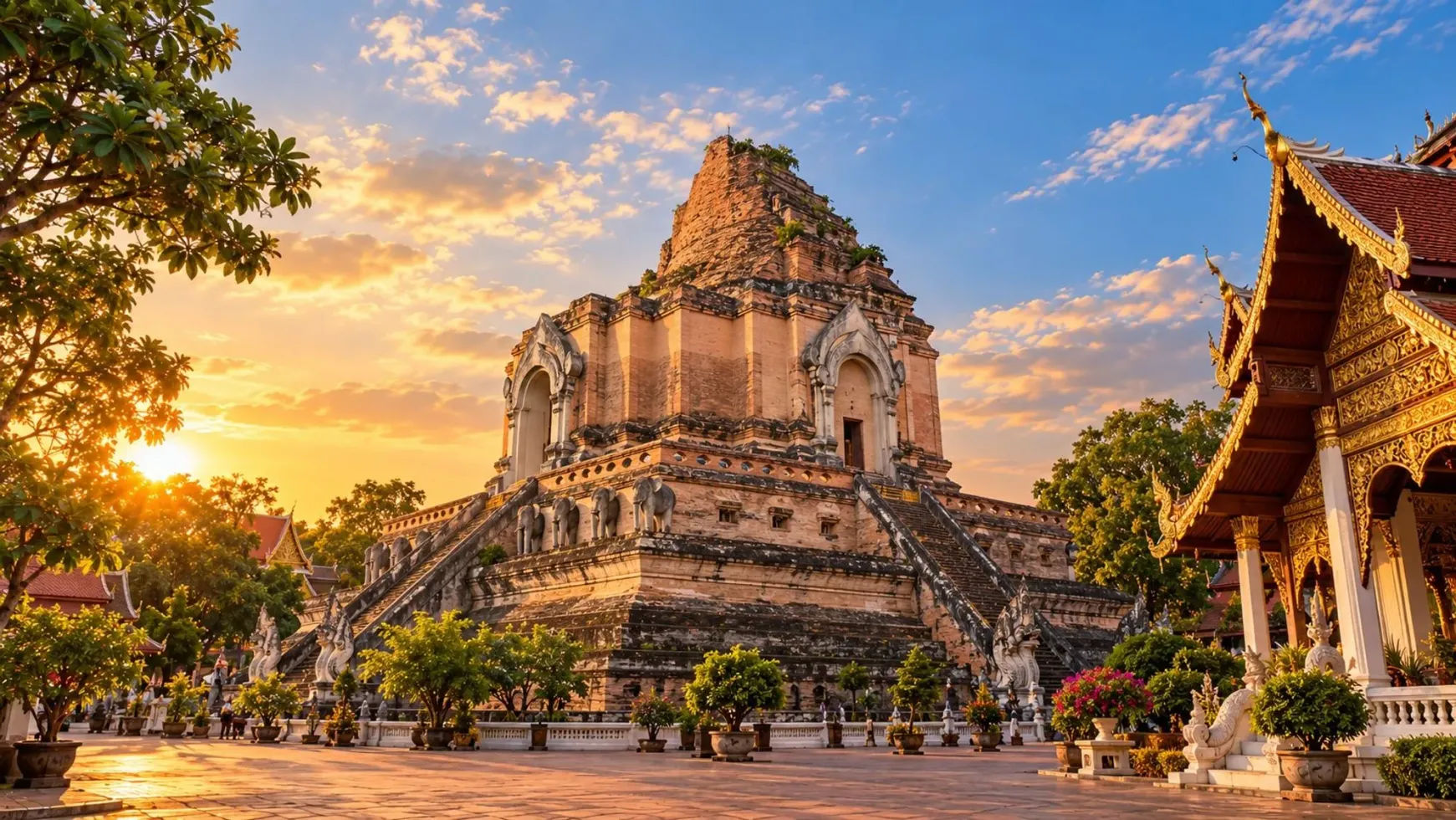
Wat Chedi Luang
Wat Chedi Luang is best known for its grand stupa and historical significance in Chiang Mai.
12
Tha Phae Gate
The eastern gate belonged to the fortified capital laid out under Mangrai after consultation with his allies Ramkhamhaeng and Ngam Muang. The photogenic brick structure is actually a 1985–1987 reconstruction, and scholars have even debated whether the old photograph used as a model showed this gate or a different Chiang Mai gateway.
13
Wat Buppharam
A historic Buddhist temple with unique Burmese architectural influences.
14
Kiti Panit General Store
Opened under the name Yong Tai Heng in the late nineteenth century, this Chinese-family emporium sold fashionable clothing, perfume, crystal and imported household novelties to Lanna royalty and wealthy officials. Burmese-influenced craftsmanship recalls the Shan, Burmese and Pa-O workers drawn to Chiang Mai by British logging firms; after decades of changing uses and abandonment, descendants restored it as a restaurant.
15
Warorot Market
Princess Dara Rasmi ordered this permanent market created in 1910 on the former royal cremation ground, naming it for her brother Inthawarorot. The surrounding streets became the commercial heart of Chinese Chiang Mai, where Teochew and Hainanese families traded beside Sikh and Muslim merchants arriving through regional networks.
+3 Stationen
So funktioniert es
Hier oder in der App freischalten — einmal zahlen, kein Abo.
Einmal herunterladen; Audio und Karte laufen ohne Empfang.
In deinem Tempo gehen, jederzeit anfangen und aufhören.