Aussicht
Tokyo Metropolitan Government Building
- Mo
- 08:00–18:45
- Di
- 08:00–18:45
- Mi
- 08:00–18:45
- Do
- 08:00–18:45
- Fr
- 08:00–18:45
- Sa
- Geschlossen
- So
- Geschlossen
- Öffnungszeiten
- The North Observatory usually closes at 17:00; the South Observatory remains open until 22:00. The South is closed on the 1st and 3rd Tuesday, and the North on the 2nd and 4th Monday of each month; both close on December 29–31, January 2–3, and inspection days. Last entry is 30 minutes before closing.
- Preis
- Admission is free: ¥0.
- Besuchshinweise
- Use the dedicated observatory elevator from the 1st floor of Main Building No. 1. On weekends and public holidays, the 2nd-floor entrance is closed; use the main entrance on the 1st floor. Tripods are not permitted for photography.
- Öffnungszeiten
- Freier Eintritt
- Öffnungszeiten
- Geht bei Regen
- Öffnungszeiten
- Geht am Abend
- Öffnungszeiten
- Etwa 30–60 Min.

Warum der Umweg sich lohnt
Kenzo Tange's twin-towered city hall combines monumental late-modern architecture with free observatories overlooking the metropolis.
The Tokyo Metropolitan Government Building is a monumental late-modern architectural complex designed by Kenzo Tange. It features two towers with free observation decks providing stunning views of the city.
Was sonst in der Nähe liegt
Die nächstgelegenen Orte, über die wir geschrieben haben, mit Luftlinie von hier.
550 m
Mode Gakuen Cocoon Tower
The Mode Gakuen Cocoon Tower is best known for its unique cocoon-shaped architectural design.
600 m
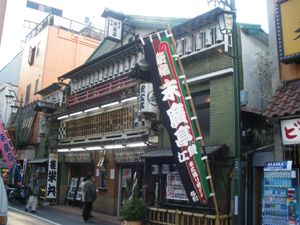
Shinjuku Suehirotei
This wooden rakugo theater became an unlikely angura venue in September 1967, when Shuji Terayama's Tenjo Sajiki presented its second production, "The Crime of Fatso Oyama," here. The collision of psychedelic experimental theater with a traditional vaudeville house captures the cultural disorder that made 1960s Shinjuku distinctive.
700 m
Shinjuku Station West Exit Underground Plaza
In 1969, a handful of anti-Vietnam War singers with guitars grew into weekly gatherings of several thousand people here. Authorities countered by changing signs from "West Exit Underground Plaza" to "West Exit Underground Passage" and deploying riot police, turning a single word on a sign into an argument over who controlled public space.
800 m
Omoide Yokocho
«Memory Lane» by Shinjuku's west exit: two alleys of tiny yakitori counters left over from the post-war black market.
1.1 km
Kabukicho
Japan's largest entertainment district, named after a kabuki theatre that was never built; the Godzilla head looks down from the Toho building.
1.3 km
Shinjuku Golden Gai
This maze of tiny two-story bars began with postwar black-market traders and later became an unlicensed red-light district. After prostitution was outlawed in 1958, its cramped rooms became refuges for writers, filmmakers and theater people; regulars Kenji Nakagami and Ryuzo Saki won the Akutagawa and Naoki prizes simultaneously in 1976, sealing the district's bohemian reputation.



Mit den Geschichten ablaufen
Diese Adresse ist eine Station von vielen. Unsere Routen und Quests verbinden sie zu einem Weg, der vor Ort aufgeht.