From party leader to president
Ebert became leader of the Social Democratic Party after August Bebel’s death in 1913. In 1919, he was elected Germany’s first president and remained in office until his death in 1925.
Literature
First president of Germany, serving from 1919 until his death in 1925.
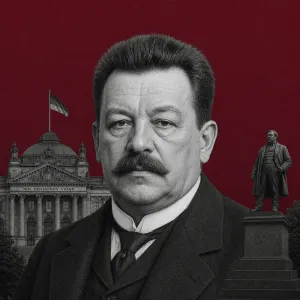
Friedrich Ebert was a German politician and leader of the Social Democratic Party. A pivotal figure in the German Revolution of 1918–1919, he became the republic’s first chancellor and, in 1919, Germany’s first president. His efforts to restore order included cooperation with military leaders, conservative forces and the right-wing Freikorps, making him a controversial historical figure.
Ebert became leader of the Social Democratic Party after August Bebel’s death in 1913. In 1919, he was elected Germany’s first president and remained in office until his death in 1925.
When Germany became a republic at the end of the First World War, Ebert served as its first chancellor. His policies focused on restoring justice and order and suppressing left-wing uprisings.
Ebert cooperated with conservative and nationalist forces, including the military leadership under General Wilhelm Groener and the right-wing Freikorps. The government suppressed socialist, communist and anarchist uprisings, as well as the right-wing Kapp Putsch.
In 1914, Ebert supported war loans to finance Germany’s effort in the First World War. He also backed the Burgfrieden policy, which sought to suppress domestic political disputes during the conflict. His position deeply divided the Social Democratic Party.
Every place in this city with a documented tie to this person.
Created here
He collaborated with Hans Schädel on the church's architectural design.
These addresses are scattered across the city. Our routes and quests put them in an order that works.