A founder of German idealism
Born in 1762, Fichte became one of the founding figures of German idealism. His philosophy developed from Kant's theoretical and ethical writings.
Literature
A founding figure of German idealism whose work examined self-consciousness, subjectivity, and consciousness.
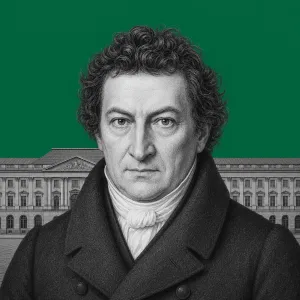
Johann Gottlieb Fichte was a German philosopher and writer whose thought developed from the theoretical and ethical writings of Immanuel Kant. He made original contributions to the study of self-consciousness and also wrote works of political philosophy. He is regarded as one of the fathers of German nationalism. Fichte is buried at Dorotheenstadt Cemetery in Berlin.
Born in 1762, Fichte became one of the founding figures of German idealism. His philosophy developed from Kant's theoretical and ethical writings.
Fichte investigated self-consciousness and self-awareness. Like Descartes and Kant, he was concerned with the philosophical problems of subjectivity and consciousness.
Fichte originated the idea of thesis–antithesis–synthesis, which is often mistakenly attributed to Hegel.
Fichte died in 1814 and is buried at Dorotheenstadt Cemetery in Berlin.
Every place in this city with a documented tie to this person.
Burial place
A late-18th-century Protestant cemetery in central Berlin, known for its compact historic grounds and its remarkable next-door neighbor: the Brecht House.
These addresses are scattered across the city. Our routes and quests put them in an order that works.
