Literature
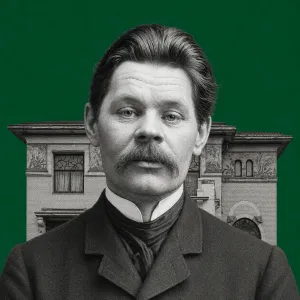
Maxim Gorky
Addresses you can still visit
Every place in this city with a documented tie to this person.
Commemorated here
Gorky Park
Gorky Park is best known as a central park in Moscow named after Maxim Gorky.
Burial place
Kremlin Wall Necropolis
The Kremlin Wall Necropolis is best known as the former national cemetery of the Soviet Union, located in Red Square, Moscow.


Traces in other cities
- Nizhny Novgorod
- Bugrov Lodging House — He transformed observations of Nizhny Novgorod’s shelters and their residents into the setting and characters of “The Lower Depths.”
- Nizhny Novgorod
- Bugrov Night Shelter — His observations of the shelter and its inhabitants helped shape the setting and characters of The Lower Depths.
- Nizhny Novgorod
- Chaliapin School Museum — He promoted the project and enlisted Chaliapin’s financial help in establishing the school.
- Nizhny Novgorod
- Former Nizhegorodsky Listok Editorial Office — He produced numerous reports, feuilletons and stories for “Nizhegorodsky Listok” between 1896 and 1904.
- Nizhny Novgorod
- Former Stolby Tea House — He initiated and publicly promoted the tea house and reading room for Millionka’s poor.
- Nizhny Novgorod
- Gogin House — He lived here intermittently from 1880 to 1884 while working for contractor Vasily Sergeyev.
- Nizhny Novgorod
- Gorky House in the Lemke Estate — Gorky lived here in 1900–1901 and wrote several important literary works during the stay.
- Nizhny Novgorod
- Gorky House on Ilyinskaya Street — Gorky lived here with his family from March 16 to May 7, 1898, before his arrest.
- Nizhny Novgorod
- Gorky Square
- Kazan
- Gorky Street
- Nizhny Novgorod
- Kurepin House — He lived here with his family and completed “Foma Gordeyev” during his rise to national fame.
- Nizhny Novgorod
- Lemke Estate, Gorky’s Korolenko Street Home — He lived here in 1900–1901 and wrote major revolutionary and dramatic works before his arrest.
- Nizhny Novgorod
- Maxim Gorky Museum-Apartment — He lived and worked here from 1902 to 1904, completing “The Lower Depths” and developing several later works.
- Nizhny Novgorod
- Millionka Slum Quarter — His encounters with Millionka’s impoverished residents supplied material for his stories about tramps and for “The Lower Depths.”
- Kazan
- National Library on Fedorovsky Hill — While living in Kazan, the future writer attempted suicide on Fedorovsky Hill on December 12, 1887, and survived after a monastery watchman found him.
- Saint Petersburg
- Peter and Paul Fortress — After the Bloody Sunday events of January 1905 he was imprisoned in the Peter and Paul Fortress (released 14 February 1905 after international protests) — his most concrete monumental tie in the catalog.
- Nizhny Novgorod
- Porkhunov House — As a child servant, he lived here in 1879–1880 while working for the Porkhunov household and shoe business.
- Nizhny Novgorod
- Stolby Tea House — He initiated the educational tea house and helped devise its program for the urban poor.
- Nizhny Novgorod
- Upper Posad Trading Rows — He helped create a charitable Christmas celebration here and later drew on shopkeeper Yulia Bolotova’s story in “The Life of Klim Samgin.”
Follow the story on foot
These addresses are scattered across the city. Our routes and quests put them in an order that works.