Architecture
Kudan Kaikan Terrace
- Mon
- 07:00–23:00
- Tue
- 07:00–23:00
- Wed
- 07:00–23:00
- Thu
- 07:00–23:00
- Fri
- 07:00–23:00
- Sat
- 07:00–23:00
- Sun
- 08:00–20:30
- Hours
- Shorter hours apply on Sundays and public holidays.
- How to visit
- Visitors may tour the facility without a reservation, except for office floors. Use Kudanshita Station Exit 4; wheelchair and stroller users are advised to use Exit 6.
- Hours
- About 15 min
Why it is worth the detour
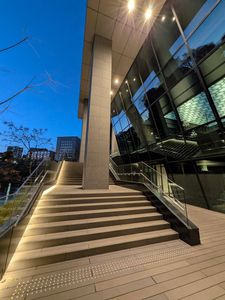
The preserved façade belongs to the former Military Hall, which became martial-law headquarters during the February 26 Incident. Officers drafted the famous radio appeal urging enlisted rebels to return to their units here, and it was broadcast from the building on February 29, helping end the standoff.
Kudan Kaikan Terrace features the preserved façade of a historic military hall, known for its role during the February 26 Incident in Japan. It is a hidden gem in Tokyo, offering a glimpse into the country's military history.
What else is close by
The nearest places we have written up, with straight-line distance from here.
200 m
Nippon Budokan
Built for martial arts, Budokan became a contested symbol of rock’s arrival when the Beatles played five concerts here between June 30 and July 2, 1966. In 1978, Cheap Trick recorded the roaring performances that became Cheap Trick at Budokan, an album whose success helped turn the hall’s name into international shorthand for a career-defining Japanese concert.
550 m
Jimbocho Book Town
About 130 second-hand bookshops in one quarter, the largest concentration in the world, grown around the universities since the 1880s.
600 m
Chidorigafuchi Moat
The northwestern moat of Edo Castle becomes one of Tokyo's most celebrated scenes when cherry branches arch above its boats and stone walls.
600 m
Former Chamberlain's Residence Site at Chidorigafuchi
Near the east entrance of Chidorigafuchi National Cemetery stood the official residence where rebels shot Chamberlain Suzuki Kantarō three times. His wife pleaded against a final sword stroke, and Suzuki unexpectedly survived—then became prime minister during Japan’s surrender in 1945.
950 m
Imperial Palace East Gardens
Paths, walls and the foundation of the lost keep reveal the former Honmaru and Ninomaru compounds of Edo Castle.
1.3 km
Koishikawa Korakuen Gardens
One of Tokyo's oldest daimyo gardens combines Japanese scenery with Chinese literary and landscape references favored by the Mito Tokugawa family.


Walk it with the stories
This address is one stop among many. Our routes and quests link them into a walk that makes sense on the ground.