
Why it is worth the detour
A 1966 shopping complex that became the collectors' mecca: Mandarake floors of manga, figures, watches and vintage toys.
What else is close by
The nearest places we have written up, with straight-line distance from here.
2.7 km
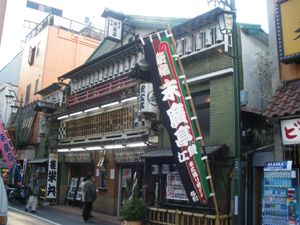
Shinjuku Suehirotei
This wooden rakugo theater became an unlikely angura venue in September 1967, when Shuji Terayama's Tenjo Sajiki presented its second production, "The Crime of Fatso Oyama," here. The collision of psychedelic experimental theater with a traditional vaudeville house captures the cultural disorder that made 1960s Shinjuku distinctive.
3.2 km
Tokyo Metropolitan Government Building
Kenzo Tange's twin-towered city hall combines monumental late-modern architecture with free observatories overlooking the metropolis.
3.5 km
Mode Gakuen Cocoon Tower
The Mode Gakuen Cocoon Tower is best known for its unique cocoon-shaped architectural design.
3.6 km
Omoide Yokocho
«Memory Lane» by Shinjuku's west exit: two alleys of tiny yakitori counters left over from the post-war black market.
3.7 km
Kabukicho
Japan's largest entertainment district, named after a kabuki theatre that was never built; the Godzilla head looks down from the Toho building.
3.7 km
Shinjuku Station West Exit Underground Plaza
In 1969, a handful of anti-Vietnam War singers with guitars grew into weekly gatherings of several thousand people here. Authorities countered by changing signs from "West Exit Underground Plaza" to "West Exit Underground Passage" and deploying riot police, turning a single word on a sign into an argument over who controlled public space.


Walk it with the stories
This address is one stop among many. Our routes and quests link them into a walk that makes sense on the ground.