Politics

Augustus

Known worldwide

Founder of the Roman Empire and its first emperor, ruling from 27 BC until AD 14.

Augustus

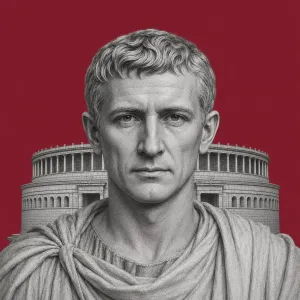
Born Gaius Octavius in 63 BC, Augustus was named as Julius Caesar’s principal heir and rose to become the dominant ruler of the Roman world. He established the principate, which retained republican institutions while concentrating military and political power in his hands. His reign began the period of relative peace known as the Pax Romana or Pax Augusta. A marble head portraying him was found near Piazza San Fedele in Como in the sixteenth century.

Worth knowing

Rome’s first emperor

After defeating his political rivals, Octavian reached an accord with Rome’s remaining elite. The Senate granted him the titles princeps, meaning “first citizen,” and Augustus. He retained control of the military and many Roman provinces.

Caesar’s principal heir

Julius Caesar, Augustus’s great-uncle, named him as his principal heir. After Caesar’s assassination in 44 BC, Octavian inherited his estate, assumed his name and sought the loyalty of Caesar’s legions.

Building an imperial system

Augustus reformed taxation and currency, developed road networks and an official courier system, and established a standing professional army. He also created the Praetorian Guard and official police and firefighting services for Rome.

A portrait found at Piazza San Fedele

A marble head portraying Augustus as pontifex maximus, or supreme pontiff, was found in the area of Piazza San Fedele in the sixteenth century.

Addresses you can still visit

Every place in this city with a documented tie to this person.

  • Commemorated here

    Piazza San Fedele

    A marble head portraying Augustus as pontifex maximus was found in the square area in the sixteenth century.

Follow the story on foot

These addresses are scattered across the city. Our routes and quests put them in an order that works.

See routes in this city