Lake Como · Lombardy, Italy

Comoseven minutes above the crowds

A Roman grid, silk that still dresses Milan, and a funicular to a 700-metre balcony over the lake. We walked it and timed it — you just turn up.

from €11.994 ready-made routes

  • 4ready-made routes
  • 11city quests
  • 114local figures
  • 87places written up

Most visitors give Como ninety minutes between a train and a boat. That is enough for the lakefront and nothing else. The city behind it is a walled Roman grid with a cathedral that puts two pagan writers on its facade, a silk industry that still supplies Milan’s fashion houses, and a cluster of 1930s rationalist buildings that architecture students fly in to see.

Ready-made routes

Planned, walked and timed by us. Open one and start walking.

See all routes

City quests

Story-driven walks with puzzles. Audio-guided, playable offline.

See all quests

People who shaped the city

Not a list of names — the addresses where their story actually happened.

  • Science

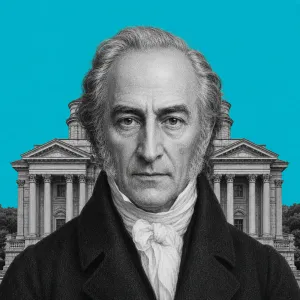
    Alessandro Volta

    1745–1827 · Inventing the voltaic pile, an early electric battery that generated electricity chemically.

    Despite his professional success, Volta preferred domestic life. In his later years, he increasingly withdrew from public life to spend time with his family.

  • Architecture

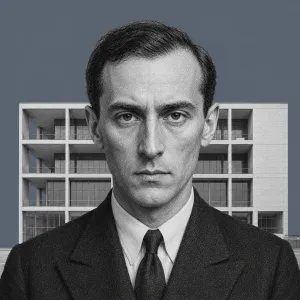
    Giuseppe Terragni

    1904–1943 · Giuseppe Terragni pioneered Italian Rationalism and designed major works of modern architecture in Como, including the Casa del Fascio.

    Terragni grew up in the Terragni Family Home and established his first architectural studio on its ground floor.

  • Literature

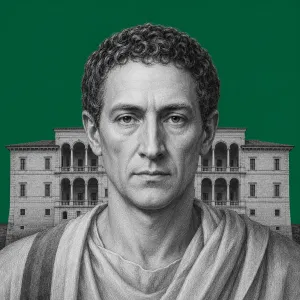
    Pliny the Younger

    61–113 · His surviving letters, including official correspondence with Emperor Trajan, provide a valuable record of Roman public life and imperial government.

    Born Gaius Caecilius, he became known as Pliny the Younger. His uncle, Pliny the Elder, helped raise and educate him.

  • Politics

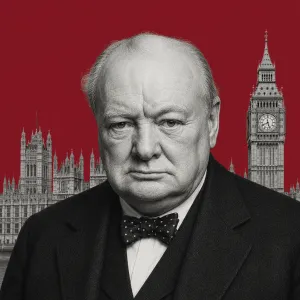
    Winston Churchill

    Serving as Prime Minister of the United Kingdom during the Second World War and again from 1951 to 1955.

    Churchill joined the British Army in 1895 and saw action in British India, the Mahdist War, and the Second Boer War. Elected to Parliament in 1900, he held several senior government offices before becoming prime minister in May 1940.

  • Science

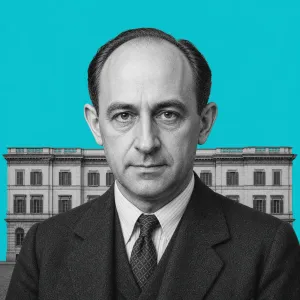
    Enrico Fermi

    1901–1954 · Italian-American physicist who created the first artificial nuclear reactor and won the 1938 Nobel Prize in Physics.

    Fermi left Italy after new racial laws affected his Jewish wife, Laura Capon. He immigrated to the United States and later worked on the Manhattan Project during the Second World War.

  • Music

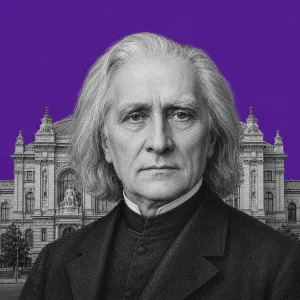
    Franz Liszt

    Hungarian composer and virtuoso pianist known for his Romantic piano works, the symphonic poem and innovations in musical form and performance.

    Liszt achieved success as a concert pianist at an early age and studied with Carl Czerny and Antonio Salieri. He later taught hundreds of piano students, many of whom became notable performers, and pioneered the masterclass as a method of teaching performance.

  • Politics

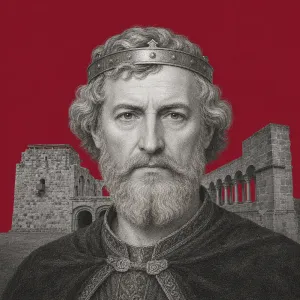
    Frederick Barbarossa

    Holy Roman Emperor whose alliance with Como enabled the reconstruction and expansion of the city’s fortifications.

    Frederick inherited the title of Duke of Swabia before being elected King of Germany in 1152. In 1155, he was crowned King of Italy in Pavia and Holy Roman Emperor by Pope Adrian IV in Rome.

  • Film

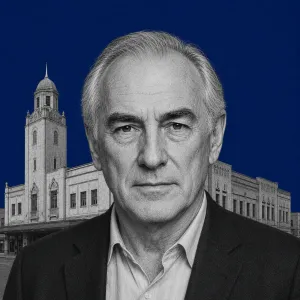
    Martin Campbell

    Director of GoldenEye and Casino Royale, which used Villa del Balbianello and Villa La Gaeta near Como as filming locations.

    Born on 24 October 1943, Campbell is a film and television director and producer known particularly for action and thriller productions.

See everyone (114)

What to see

Every stop we have researched, mapped and written up.

  • Palace & fortress

    Villa del Balbianello

    A cardinal talks literature under an open loggia; generations later, an explorer brings Everest and the North Pole indoors. Then the film crews arrive. This small Lake Como peninsula has changed roles without surrendering its finest asset: the view.

  • Church

    Como Cathedral

    No battery, no grand experiment: according to local tradition, the elderly Alessandro Volta came here for Mass each day. Inside, a floor plaque marks the place associated with that quiet routine.

  • Transport landmark

    Como–Brunate Funicular

    In 1894, the mule-track slog up from Como met its match: a railway climbing roughly 500 vertical metres. Brunate would never be quite so secluded again.

  • Museum

    Villa Carlotta

    Giovanni Battista Sommariva has turned an old noble residence into a showpiece of marble and paint, ready for Europe’s cultured travelers. Then comes the next twist: a Prussian princess gives the entire villa away as a wedding present.

  • Palace & fortress

    Villa d’Este

    It’s 1925, and Alfred Hitchcock is filming The Pleasure Garden beside Lake Como. By then, this villa has already played a cardinal’s retreat, a queen’s residence and a grand hotel. Cinema is simply its next act.

  • Curiosity

    Villa Oleandra

    A camera lifts, a sightseer slows down, and a village of about 930 people finds itself tangled in Hollywood fame. At Villa Oleandra, Lake Como’s celebrity fantasy met the awkward reality of people actually living here.

  • Park & garden

    Gardens of Villa Melzi

    Lake water ahead, crisp neoclassical lines behind: Francesco Melzi d’Eril clearly did not think a summer retreat should look off duty. Napoleon’s vice-president commissioned the estate; then Stendhal and Franz Liszt arrived, shifting the story from politics toward Romantic inspiration.

  • Monument

    Palazzo Terragni (Casa del Fascio)

    It is 1945, and the political order behind this building has collapsed. The former Fascist Party office now has new occupants: parties of the National Liberation Committee. The walls have not moved; Italian politics has.

  • Theatre & culture

    Villa Serbelloni and the Rockefeller Foundation Bellagio Center

    June 1963: a helicopter lands in the grounds, John F. Kennedy stops by, and Villa Serbelloni adds a presidential cameo to a biography already packed with castles, princesses, hotel guests and Nobel laureates.

See all places (87)

The city in short

A Roman grid you can still walk

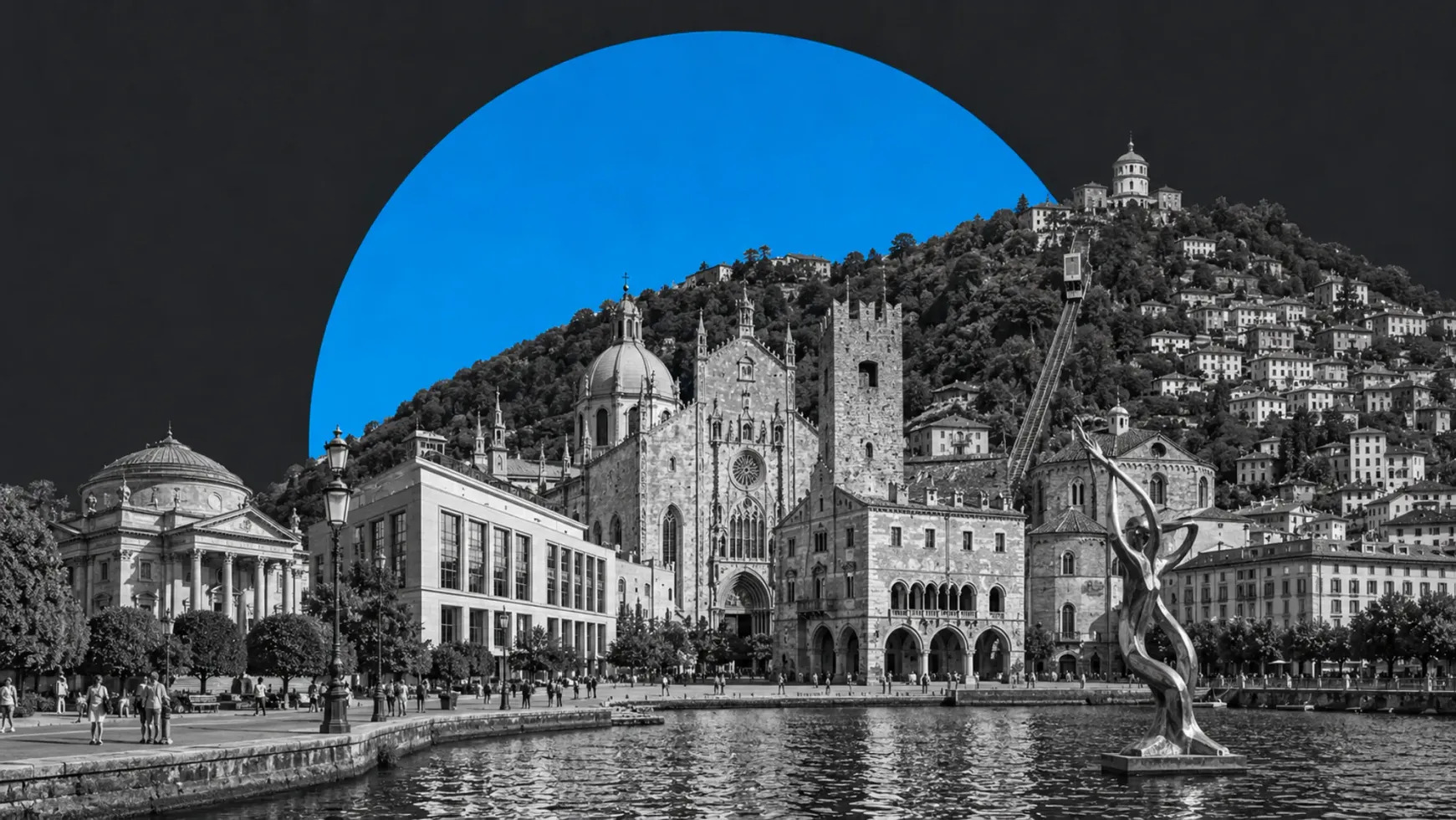
Julius Caesar refounded the town as Novum Comum in 59 BC, and the street plan inside the medieval walls is still his: a tight rectangular grid, unusual for an Italian lake town. Porta Torre, the surviving 1192 gate tower, marks where the walled city ended. Both Pliny the Elder and Pliny the Younger were born here, and the cathedral’s builders were confident enough to seat both of them — Roman pagans — in niches beside the main door.

The cathedral that took 350 years

Work on the Duomo began in 1396 in Gothic and finished in 1744 with a Baroque dome by Filippo Juvarra, the architect of Turin. You can read the shift in taste from left to right across the marble facade. Two streets away, the Broletto of 1215 wears grey, white and pink marble stripes, and the Romanesque Basilica of Sant’Abbondio, consecrated in 1095, sits quietly outside the walls with a fresco cycle most visitors never reach.

Silk, and the man the volt is named after

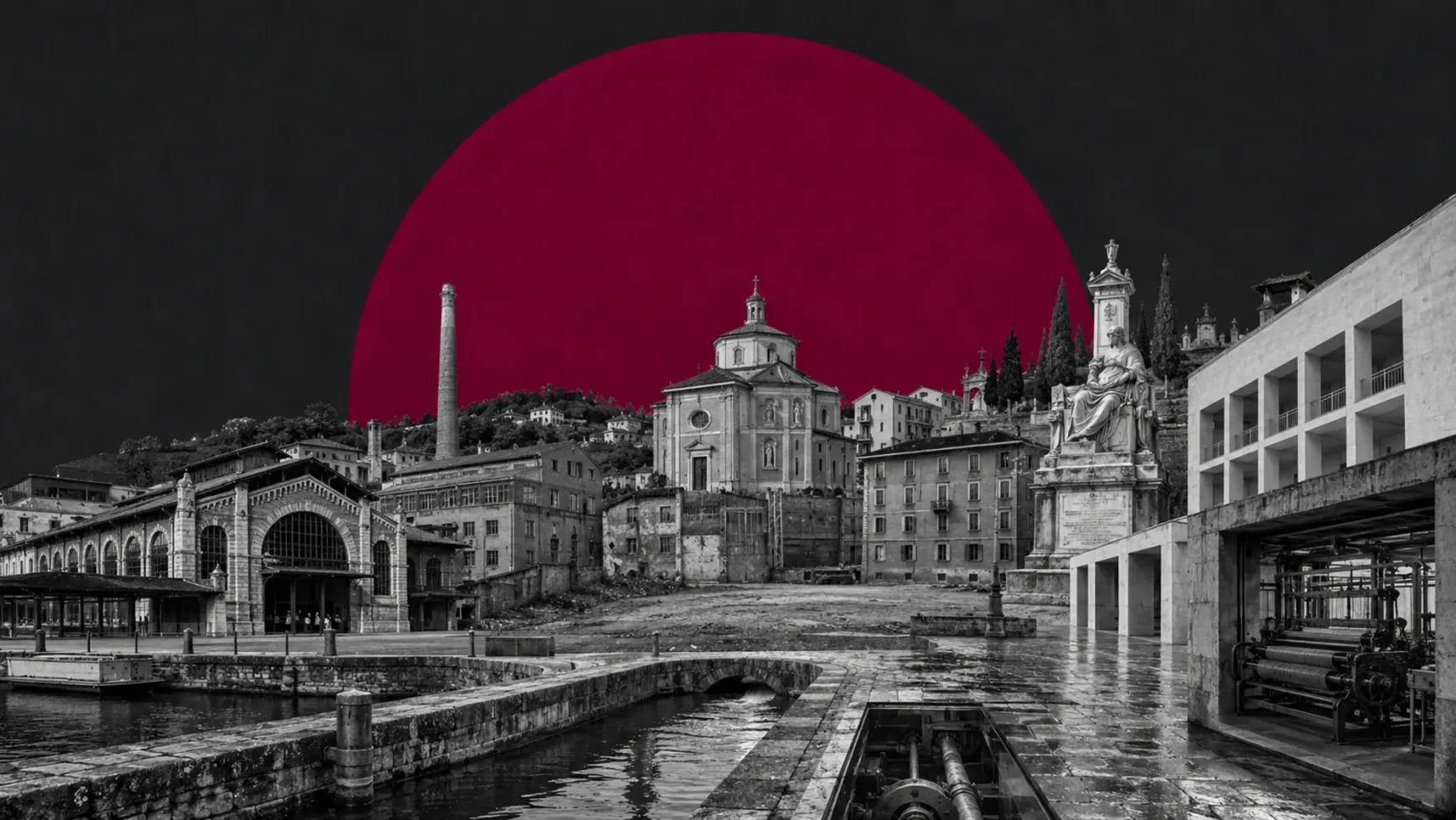
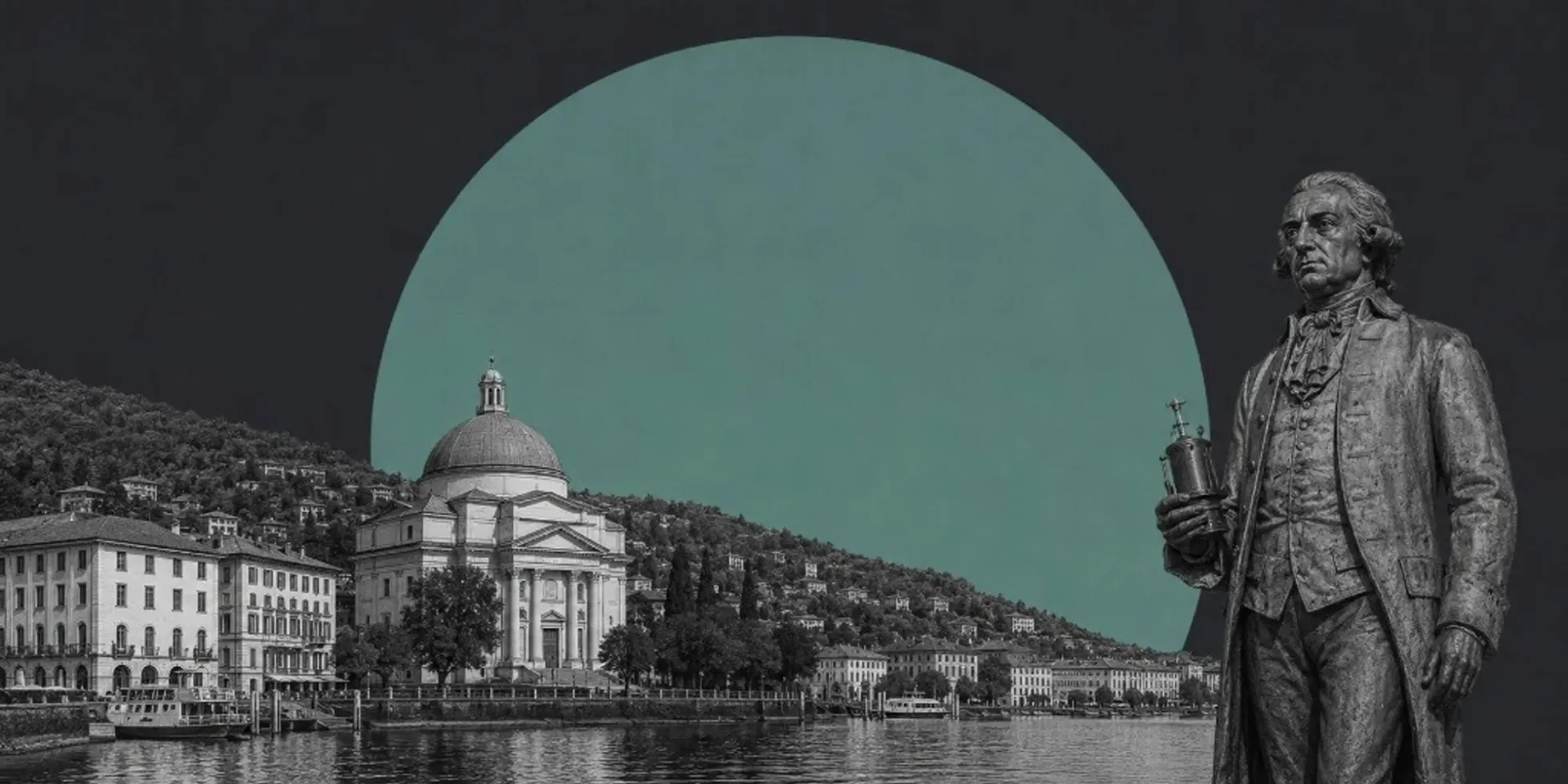
Como has spun and printed silk since the sixteenth century and still does it for the Milan fashion houses; the Museo della Seta explains the machinery without romanticising it. The city’s other export was Alessandro Volta, born here in 1745, who stacked zinc and copper discs into the first battery around 1800. The Tempio Voltiano on the lakefront, built for the centenary of his death, holds his actual instruments.

The rationalist detour

Between the wars Como became an unlikely laboratory for Italian modernism. Giuseppe Terragni built the Novocomum apartment block in 1929 — locals called it “the transatlantic liner” — and the Casa del Fascio in 1936, still one of the most studied buildings of the period. Antonio Sant’Elia, the futurist who drew cities he never got to build, was born here in 1888 and died at twenty-eight in the war.

Seven minutes and 700 metres up

The funicular to Brunate has run since 1894 and climbs to just over 700 metres in about seven minutes. From the top the lake finally reads as the inverted Y it is on the map, and the walk to the Volta lighthouse takes another half hour on a paved path. It is the cheapest good view in Lombardy and the reason to stay a second day.

Practical matters

Getting here
Como San Giovanni from Milano Centrale, about 37 minutes. Como Nord Lago from Milano Cadorna, about an hour, but it puts you on the lakefront. Lugano is roughly 30 minutes north by train.
Two stations, know which
Nord Lago is beside the water and the ferry dock. San Giovanni is uphill, a 15-minute walk from the centre.
Best months
Late April to June, and September into early October. July and August are hot and crowded; ferry timetables thin out in winter.
Do you need a car
No, and it is a liability. The historic centre is largely pedestrian, parking is scarce and expensive, and the lake is better served by ferry.
How long to stay
A full day covers the walled town and the funicular. Two nights let you add a lake village and the silk museum without rushing.
On foot
Everything in this guide is within a 25-minute walk of the Duomo, except Brunate, which is the funicular.

Frequently asked questions

Is Como worth more than a day trip from Milan?

Yes, if you go past the lakefront. The walled centre, the silk museum and the rationalist buildings are a comfortable full day, and Brunate needs a couple of unhurried hours on top. Day-trippers see the promenade and leave believing that is the city.

Do the routes and quests work without mobile data?

Yes. Download the route before you set off and the maps, text and audio stay on the phone. Useful on the funicular and in the streets under the hill, where signal is patchy.

Which languages is the audio in?

Each route and quest lists its available languages on its own card. Como content is produced in English, Italian and German first.

How long is a city quest?

Most run 90 minutes to two and a half hours, including stops. You set the pace and can pause and resume later the same day.

Is this suitable for children?

The quests are built around puzzles at each stop, which works well from roughly age eight. The ready-made routes are ordinary walking with commentary and suit any age that will walk a few kilometres.

What happens if it rains?

Nothing expires. Access stays on your account, so you can start the same route the next dry morning. Rainy-day alternatives are the Duomo, the silk museum and the Tempio Voltiano, all within ten minutes of each other.

Run a hotel, hostel or B&B?

Como’s problem is that guests treat it as a two-hour stop between Milan and Bellagio. Every guest you send up the funicular with a route in their pocket is a guest who stays a second night — and books it with you.

See how it works