Tokyo
Как живут местные
Где токийцы покупают рыбу и носки, едят после работы и гуляют в воскресенье. Амэёко под путями Яманотэ — базар с 1945 года; Янака-Гиндза — соседи с сумками, а не только туристы с камерами; Хоппи-дори и Омоидэ-ёкотё — столики на проходе и пиво, которое не пиво; мондзя на Цукисиме жарят сами. Парк Ёёги в воскресенье — танцоры и пикники; парк Хибия — клерки с обедом; святилище Нэдзу — утренние поклоны по пути на работу. Люди сегодняшнего города: лавочники, которые придумали кошек на крышах, рассказчики ракуго в Суэхиротэй и хозяева стоек, у которых соус подливают с 1951 года.
Mercato
Ameyoko Market
A post-war black market under the Yamanote tracks that became a 400-metre bazaar of fish, candy, sneakers and spices.
Vie e quartieri
Yanaka Ginza
A 170-metre shopping street of the old «shitamachi» with about 60 family shops, cat statues and the «sunset stairs» at its top.
Vie e quartieri
Tsukishima Monja Street
About 70 restaurants on one street serving monjayaki, the runny Tokyo cousin of okonomiyaki, cooked on the table griddle.
Mercato
Omoide Yokocho
«Memory Lane» by Shinjuku's west exit: two alleys of tiny yakitori counters left over from the post-war black market.
Vie e quartieri
Hoppy Street
A covered alley of open-front izakaya west of Senso-ji, named after Hoppy, the cheap beer-like drink of post-war Tokyo.
Parchi e giardini
Yoyogi Park
Former army parade ground, US housing «Washington Heights» and 1964 Olympic village, now Tokyo's weekend lawn for picnics, dancers and musicians.
Parchi e giardini
Hibiya Park
Opened in 1903 as Japan's first Western-style modern urban park, Hibiya became a stage for concerts, demonstrations and mass politics.
Chiesa
Nezu Shrine
Its richly decorated 1706 buildings, azalea garden and tunnel of red torii offer one of Tokyo's best-preserved Edo-period shrine settings.
Teatro e cultura
Shinjuku Suehirotei
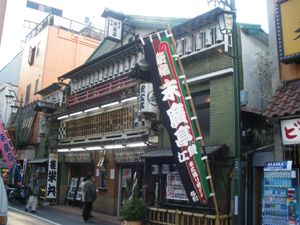
This wooden rakugo theater became an unlikely angura venue in September 1967, when Shuji Terayama's Tenjo Sajiki presented its second production, "The Crime of Fatso Oyama," here. The collision of psychedelic experimental theater with a traditional vaudeville house captures the cultural disorder that made 1960s Shinjuku distinctive.
Parchi e giardini
Sumida Park
Riverside park on both banks of the Sumida with the cherry trees planted by the eighth shogun, the Asahi flame and the Skytree in view.
Vie e quartieri
Takeshita Street
A 350-metre pedestrian lane opposite Harajuku Station that became the shop window of Japanese teen fashion and crepe stands.
Vie e quartieri
Nakamise-dori
The 250-metre approach from Kaminarimon to Senso-ji, lined with about 90 stalls, one of Japan's oldest shopping streets.
Vie e quartieri
Shimokitazawa
A low-rise maze of vintage shops, small theatres and live houses two stops from Shibuya — Tokyo's indie quarter.
Vie e quartieri
Jimbocho Book Town
About 130 second-hand bookshops in one quarter, the largest concentration in the world, grown around the universities since the 1880s.
Vie e quartieri
Kappabashi Kitchenware Street
An 800-metre street of about 170 shops selling knives, pots and the plastic food replicas seen in restaurant windows.
Curiosità
Nakano Broadway
A 1966 shopping complex that became the collectors' mecca: Mandarake floors of manga, figures, watches and vintage toys.
Mercato
Harmonica Alley
These cramped covered lanes began with the informal station-front market that appeared after Japan's defeat in 1945. The tiny shops were later nicknamed for their resemblance to the closely spaced holes of a harmonica, and the surviving maze remains a remarkably intact descendant of Tokyo's postwar black-market city.