Tokio
Малые места с большой историей
Точки, мимо которых проходят: святилище с черепом Такао Дайю у стены офиса, пруд Сансиро, где Сосэки оставил героя, дом Мори Огая, библиотека Мураками в Васэде, аллея Гармоника в Кичидзёдзи, две старые станции — Мансэйбаси и первый Симбаси, ива оглядывания у бывших ворот Ёсивары, дом камергера у рва, канал, ставший парком, участок отеля Санно, от которого остался только адрес, и Красные ворота Тодая. Всё бесплатно, кроме музеев.
Kirche
Takao Inari Shrine
This tiny shrine grew from the legend of Takao Dayu, a celebrated Yoshiwara courtesan supposedly murdered aboard a boat after rejecting the lord who purchased her contract. The shrine claims to enshrine a skull associated with her, but historians dispute both the murder story and the relic—making it a striking example of a courtesan becoming the center of an enduring urban ghost legend.
Park & Garten
Sanshiro Pond
This former daimyo-garden pond acquired its everyday name from Soseki's novel Sanshiro. In the book, the inexperienced student Sanshiro first encounters the mysterious Mineko here, and the fictional meeting became so famous that it displaced the pond's formal name in popular speech.
Museum
Mori Ogai Memorial Museum
The museum occupies Kanchoro, the former home where Mori Ogai spent three decades and wrote works including The Wild Geese and The Boat on the Takase River. Ogai also held poetry gatherings here that attempted to bridge rival literary groups, attracting figures such as Akiko Yosano, Takuboku Ishikawa and Mokichi Saito.
Museum
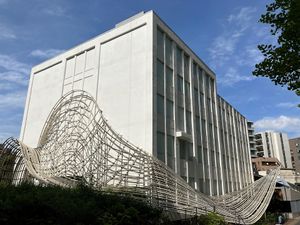
The Haruki Murakami Library
Waseda University transformed one of its campus buildings into a home for Haruki Murakami's manuscripts, translations, records and literary archive. Visitors encounter a recreation of his study and the grand piano once used at Peter Cat, the jazz café he ran before becoming a novelist.
Markt
Harmonica Alley
These cramped covered lanes began with the informal station-front market that appeared after Japan's defeat in 1945. The tiny shops were later nicknamed for their resemblance to the closely spaced holes of a harmonica, and the surviving maze remains a remarkably intact descendant of Tokyo's postwar black-market city.
Verkehrsbauwerk
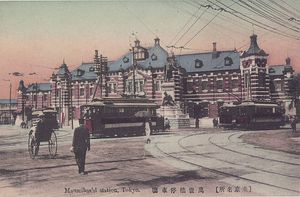
Old Manseibashi Station
Manseibashi opened in 1912 as a major Chuo Line terminal but lost its importance as Tokyo's railway geography shifted, finally closing in 1943. Its red-brick viaduct, granite stairways, and abandoned platform survived for seventy years before reopening as a public deck and commercial passage where trains still rush past on both sides.
Verkehrsbauwerk
Old Shimbashi Station
Japan's first railway terminus opened here in 1872, burned after the 1923 Great Kanto Earthquake, and disappeared beneath the vast Shiodome freight terminal. Redevelopment uncovered its foundations in 1991; the reconstructed station now stands above protected remains that can be viewed through a glass floor.
Kuriosität
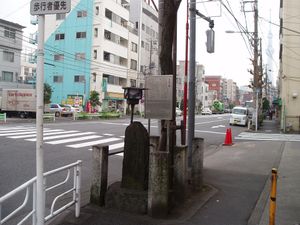
Mikaeri Yanagi
Customers departing Yoshiwara were said to pause beside this willow and look back regretfully, giving it the name “Looking-Back Willow.” The present tree is a later replacement and has been moved from its original position beside the Sanya Canal, but it remains the quarter’s most evocative farewell marker.
Kuriosität
Former Chamberlain's Residence Site at Chidorigafuchi
Near the east entrance of Chidorigafuchi National Cemetery stood the official residence where rebels shot Chamberlain Suzuki Kantarō three times. His wife pleaded against a final sword stroke, and Suzuki unexpectedly survived—then became prime minister during Japan’s surrender in 1945.
Ufer
Sanya-bori Park
This long, narrow park covers the former Sanya Canal, once the elegant water route to Yoshiwara. Wealthy visitors hired fast, pointed chokibune boats and approached the quarter by water, turning the journey itself into a conspicuous part of the night’s entertainment.
Kuriosität
Sanno Hotel Site
The Sanno Hotel, replaced by Sanno Park Tower, became a principal rebel stronghold after the assassinations and occupation of central Tokyo. Soldiers barricaded themselves in the fashionable hotel while loyal forces gathered outside and imperial orders transformed the self-styled reformers into officially condemned rebels.
Architektur
University of Tokyo Red Gate (Akamon)
The 1827 vermilion gate built by the Maeda lords to receive a shogun's daughter as a bride, now the symbol of Japan's top university.