Tokio
История: от Эдо до Сёва
Замок без башни, ворота, у которых в снегу убили министра, храм 47 ронинов, усыпальница сёгунов под Токийской башней, парк на месте последней битвы за Эдо, форты против эскадры Перри. Двадцатый век: два покушения на вокзале, площадь первого бунта, подземная площадь протестов 1969-го и угол, где расстреляли мятежников 1936-го. Серьёзные места в этом списке — без шуток и селфи. Добавились квартал мятежа 26 февраля 1936 года — от парка Такахаси до Кудан Кайкан, пруд Ёсивары 1923 года, храм Дзёкан-дзи, Красные ворота Тодая и две старые станции.
Park & Garten
Imperial Palace East Gardens
Paths, walls and the foundation of the lost keep reveal the former Honmaru and Ninomaru compounds of Edo Castle.
Palast & Festung
Sakuradamon Gate
The 1620s gate of Edo Castle where in 1860 the shogun's chief minister Ii Naosuke was assassinated in the snow.
Kirche
Sengakuji Temple
The graves of the forty-seven ronin make this temple the central site for Japan's most famous tale of samurai loyalty and revenge.
Kirche
Zojoji Temple
The Tokugawa family's principal funerary temple tells the story of shogunal power beneath the modern silhouette of Tokyo Tower.
Kirche
Ueno Toshogu Shrine
A gilded 1651 shrine to Tokugawa Ieyasu that survived the 1868 battle, the 1923 earthquake and the 1945 raids intact.
Park & Garten
Ueno Park
The former grounds of the powerful Kaneiji temple became a battlefield in 1868 and later Tokyo's great museum and cherry-blossom park.
Friedhof
Yanaka Cemetery
This atmospheric cemetery contains the grave of the last Tokugawa shogun and preserves the quiet, temple-filled character of old Yanaka.
Park & Garten
Hibiya Park
Opened in 1903 as Japan's first Western-style modern urban park, Hibiya became a stage for concerts, demonstrations and mass politics.
Platz
Shinjuku Station West Exit Underground Plaza
In 1969, a handful of anti-Vietnam War singers with guitars grew into weekly gatherings of several thousand people here. Authorities countered by changing signs from "West Exit Underground Plaza" to "West Exit Underground Passage" and deploying riot police, turning a single word on a sign into an argument over who controlled public space.
Denkmal
February 26 Incident Memorial Statue
The corner beside the Shibuya tax office was once part of Tokyo’s military prison, where nineteen convicted leaders and ideological supporters of the coup were executed by firing squad in 1936 and 1937. Supporters erected the memorial in 1965 on or near the former execution ground, creating an uneasy memorial to both rebellion and repression.
Brücke
Nihonbashi Bridge
First built in 1603, this bridge marked the starting point of the Five Highways and remains Japan's official road-distance zero point.
Friedhof
Aoyama Cemetery
Aoyama Cemetery is best known for its cherry blossoms and historical significance.
Park & Garten
Takahashi Korekiyo Memorial Park
This quiet garden occupies the grounds of Finance Minister Takahashi Korekiyo’s residence, where rebel soldiers assassinated him in his upstairs bedroom on February 26, 1936. The house was later moved elsewhere, but the surviving garden and bronze statue make this one of the clearest physical traces of the coup attempt.
Kuriosität
Sanno Hotel Site
The Sanno Hotel, replaced by Sanno Park Tower, became a principal rebel stronghold after the assassinations and occupation of central Tokyo. Soldiers barricaded themselves in the fashionable hotel while loyal forces gathered outside and imperial orders transformed the self-styled reformers into officially condemned rebels.
Architektur
Prime Minister's Official Residence (Former Prime Minister's Office)
Rebels stormed this 1929 building seeking Prime Minister Okada Keisuke but killed his brother-in-law, Matsuo Denzō, after mistaking him for Okada. The prime minister hid inside for more than a day and escaped among visitors arriving to mourn his supposed death; the historic building was later shifted within the compound and converted into the official residence.
Architektur
National Diet Building
The Lockheed scandal became national theater here when Marubeni executives testified before the House of Representatives Budget Committee in February and March 1976. Their denials about coded “peanuts” receipts were later judged to be false testimony, fixing the word “peanuts” in Japan’s political vocabulary as shorthand for covert money.
Kuriosität
Tokyo Metropolitan Police Headquarters Site
Rebel troops occupied the police headquarters beside Sakuradamon early on February 26, temporarily neutralizing the civilian force expected to defend the capital. The police leadership rejected proposals for a direct armed counterattack, leaving the army to suppress its own mutiny.
Kuriosität
Former Chamberlain's Residence Site at Chidorigafuchi
Near the east entrance of Chidorigafuchi National Cemetery stood the official residence where rebels shot Chamberlain Suzuki Kantarō three times. His wife pleaded against a final sword stroke, and Suzuki unexpectedly survived—then became prime minister during Japan’s surrender in 1945.
Architektur
Kudan Kaikan Terrace
The preserved façade belongs to the former Military Hall, which became martial-law headquarters during the February 26 Incident. Officers drafted the famous radio appeal urging enlisted rebels to return to their units here, and it was broadcast from the building on February 29, helping end the standoff.
Denkmal
Yoshiwara Benzaiten and Earthquake Memorial
This was once the site of the quarter’s flower-shaped Benten Pond. During the fires following the Great Kanto Earthquake on September 1, 1923, about 490 people, including many women from Yoshiwara, died here; the statues and memorial stones sustain both annual remembrance and later tales of female apparitions around the former pond.
Friedhof
Jokanji Temple
Known as the “Throw-In Temple,” Jokanji received the bodies of impoverished or unclaimed Yoshiwara women, including victims of the 1855 Ansei earthquake. Its New Yoshiwara memorial tower embodies the saying that a woman might be born into the “bitter world” and end at Jokanji, making this the quarter’s most sobering surviving place.
Architektur
University of Tokyo Red Gate (Akamon)
The 1827 vermilion gate built by the Maeda lords to receive a shogun's daughter as a bride, now the symbol of Japan's top university.
Verkehrsbauwerk
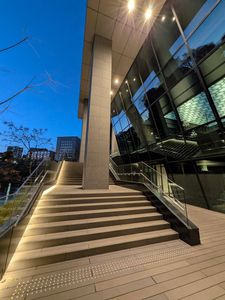
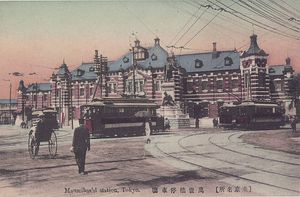
Old Manseibashi Station
Manseibashi opened in 1912 as a major Chuo Line terminal but lost its importance as Tokyo's railway geography shifted, finally closing in 1943. Its red-brick viaduct, granite stairways, and abandoned platform survived for seventy years before reopening as a public deck and commercial passage where trains still rush past on both sides.
Verkehrsbauwerk
Old Shimbashi Station
Japan's first railway terminus opened here in 1872, burned after the 1923 Great Kanto Earthquake, and disappeared beneath the vast Shiodome freight terminal. Redevelopment uncovered its foundations in 1991; the reconstructed station now stands above protected remains that can be viewed through a glass floor.