Family and later life
Despite his professional success, Volta preferred domestic life. In his later years, he increasingly withdrew from public life to spend time with his family.
Science
Inventing the voltaic pile, an early electric battery that generated electricity chemically.
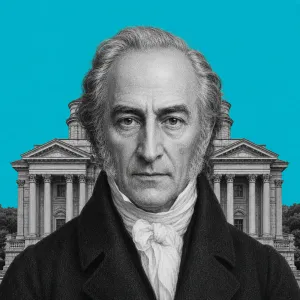
Alessandro Volta was an Italian chemist and physicist born in Como in 1745. He is also credited with discovering methane and held the chair of experimental physics at the University of Pavia for nearly 40 years. The SI unit of electric potential, the volt, is named in his honour.
Despite his professional success, Volta preferred domestic life. In his later years, he increasingly withdrew from public life to spend time with his family.
Volta invented the voltaic pile in 1799 and described his experiments in a two-part letter to the president of the Royal Society in London, published in 1800. The device showed that electricity could be generated chemically, challenging the prevailing theory that it came solely from living beings and contributing to the development of electrochemistry.
Napoleon Bonaparte admired Volta's invention and invited him to demonstrate it to members of the Institute of France. Napoleon later conferred numerous honours upon him.
At Gattoni Tower, Volta studied atmospheric electricity with his friend Giulio Cesare Gattoni. He also attended predecessor schools associated with today’s Alessandro Volta High School and Science Museum before becoming regent and professor of physics there.
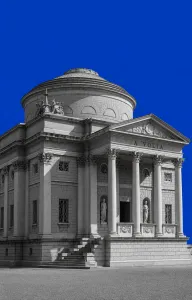
Volta was born, lived for periods, enlarged the family property, and died at Palazzo Volta in Como. His remains have rested in the city’s neoclassical Volta Mausoleum since 1831.
Every place in this city with a documented tie to this person.
Studied here
He attended predecessor schools associated with the institution before becoming its regent and physics professor.
Lived here
He was born, lived for periods, enlarged the family property, and died in this house.
Studied here
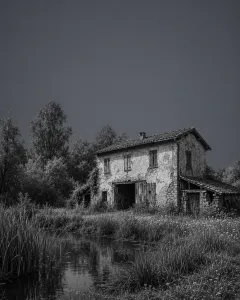
Later local accounts say he made youthful observations of marsh gas and frogs on the family property.
Performed here
He reportedly taught heavily attended catechism lessons in the church and was later given his funeral rites here.
Performed here
According to the commemorative inscription, the elderly scientist regularly worshipped from this spot.
Commemorated here
His name appears on the façade beside those of Pliny and Paolo Giovio.
Studied here
He attended the Jesuit college here from 1758, receiving a humanistic and philosophical education.
Created here
He conducted experiments here on atmospheric electricity with his friend Giulio Cesare Gattoni.
Studied here
He accompanied Carlo Amoretti's 1785 exploration and held the rope during the descent into the cave.
Commemorated here
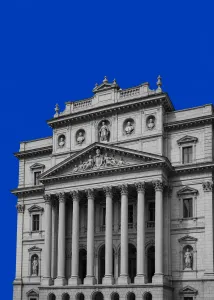
His name occupies the only medallion reserved for a single person on the building's historical frieze.
Commemorated here
He is represented standing atop the monument's massive pedestal.
Commemorated here
His life, instruments, and invention were the central subjects of the centenary exhibition erected here.
Commemorated here
A version of Giovanni Battista Comolli's bust of Volta is displayed in the villa's Hall of Honor.
Commemorated here
A lighthouse in Brunate’s San Maurizio district, built in honour of Alessandro Volta, who once lived in the town above Como.
Studied here
As a curious child he investigated the spring's glittering particles and reportedly nearly drowned while searching for them.
Lived here
He spent his first years in Brunate with the Pedraglio-Monti household, although the exact house remains disputed.
Studied here
Tradition holds that he kept a library and pursued research in this house.
These addresses are scattered across the city. Our routes and quests put them in an order that works.

.jpg?width=1600)


