Monument
Camerlata Fountain
Milan, 1936: concrete rings and spheres make their grand entrance at the Triennale. One snag—they were designed for a traffic square in Como.

Why it is worth the detour
An airborne composition of concrete rings and spheres designed by architect Cesare Cattaneo and abstract painter Mario Radice. Created for this Como traffic square, it made its debut at Milan’s 1936 Triennale and took decades to reach its intended home.
The Camerlata Fountain is a unique monument featuring an artistic composition of concrete rings and spheres. It was designed by architect Cesare Cattaneo and abstract painter Mario Radice, and is located in a traffic square in Como.
The people behind this address
Documented connections, not celebrity trivia.
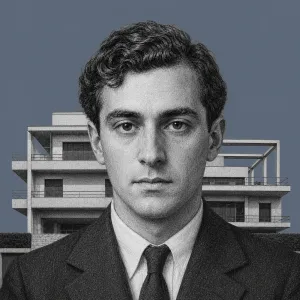
Cesare Cattaneo
Cattaneo co-designed the fountain’s circular Rationalist composition.
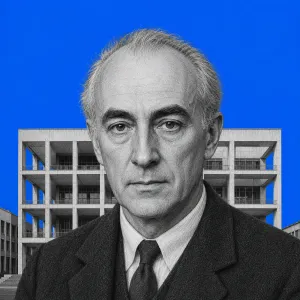
Mario Radice
Radice collaborated with Cattaneo, translating abstract painting into monumental urban form.
What else is close by
The nearest places we have written up, with straight-line distance from here.
400 m
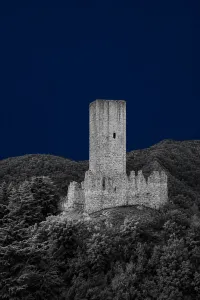
Castello Baradello
Turn toward Como, then back to the fortification. City, hill, stonework: Castello Baradello tells its story through geography before anyone says a word.
950 m
Sant'Elia Nursery School
Como’s textile economy is gathering speed, the workers’ district is growing, and many mothers are heading to work. One practical question follows them out the door: who looks after the children?
1.2 km
Former Ticosa Silk-Printing Works and Santarella Power House
Como’s luxury silk has an awkward backstage: workers, chemicals, heavy industry—and, here, an enormous gap where most of the factory has disappeared.
1.3 km
Via Anzani Workers’ Housing
On paper, this was a whole new district. Then the budget cuts arrived, and an entire neighbourhood shrank to two apartment blocks.
1.4 km
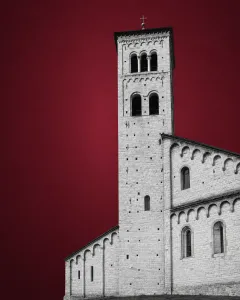
Basilica of Sant'Abbondio
Your map says Via Regina 35. Look up: modern Como has just been interrupted by an 11th-century Romanesque basilica.
1.5 km
Casa Cattaneo-Alchieri
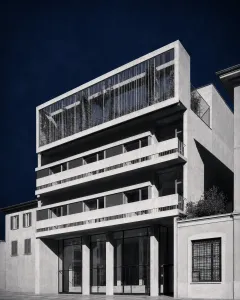
Look up: one apartment block is doing its best impression of a pile of private villas. Pietro Lingeri built the illusion with projecting terraces—then returned in the 1950s and disrupted his own skyline.


Walk it with the stories
This address is one stop among many. Our routes and quests link them into a walk that makes sense on the ground.